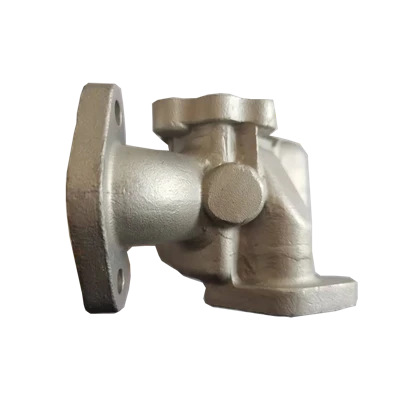
1. Poor Surface Finish
Sand castings typically have a rough, granular surface texture due to the sand mold material. The surface roughness generally ranges from 125–250 μm Ra, which is much rougher than die casting or investment casting. Most sand-cast parts require secondary machining, grinding, or shot blasting to achieve acceptable surface quality.
2. Lower Dimensional Accuracy & Tolerances
Compared to precision casting methods, sand casting produces parts with wider dimensional tolerances (typically ±0.5 mm or more for medium-sized parts). Factors such as sand shifting during mold assembly, metal shrinkage, and pattern wear all contribute to dimensional variation. This makes it unsuitable for parts requiring tight tolerances without post-machining.
3. Higher Risk of Internal Defects
Sand molds are porous and can trap gas during metal pouring, leading to common defects:
Gas porosity - air or gas bubbles trapped in the casting
Sand inclusions - sand particles washed into the molten metal
Shrinkage cavities - from uneven cooling
Pinholes - surface-level gas bubbles
4. Limited Detail & Intricacy
Sand molds cannot reproduce fine features, thin walls, or complex internal geometries as well as investment casting or die casting. Minimum wall thickness is generally around 3–5 mm for most sand castings, and sharp details tend to blur.
5. High Labor Intensity (Traditional Methods)
Green sand and manual sand casting require significant labor for pattern making, mold preparation, ramming, shakeout, and cleaning. While automated sand molding lines exist, tooling and setup costs can be high for low-volume runs.
6. Slow Production Cycle
Each mold is typically destroyed during shakeout (one mold per casting), so cycle times are longer compared to permanent mold processes. For high-volume production, sand casting is generally less efficient than die casting.
7. Material Waste & Environmental Impact
High scrap rates due to defects
Large volumes of used sand require disposal or reclamation
Binder chemicals (resins, catalysts) can generate hazardous fumes during pouring
Dust generation poses occupational health concerns
8. Not Ideal for Small, High-Volume Parts
For small components produced in large quantities (e.g., automotive brackets, electronic housings), sand casting is usually slower and more expensive per part than pressure die casting.
Despite these disadvantages, sand casting remains irreplaceable for large, heavy, or low-volume parts (such as machine tool beds, engine blocks, pump housings) where its low tooling cost and material flexibility outweigh the drawbacks.
While these limitations are inherent to the sand casting process, they can be significantly mitigated and effectively controlled through refined process design and rigorous production management. Boasting over 20 years of hands-on casting experience, our team has developed systematic countermeasures for the common pain points of sand casting - from optimized mold design and sand formulation to precise pouring parameter tuning and full-stage quality inspection. We are well positioned to properly avoid most of the above issues and deliver consistent, high-quality castings that match your expectations.
Feel free to send us your detailed drawings and project requirements for an inquiry. We will get back to you promptly with a professional customized solution and a targeted quotation.