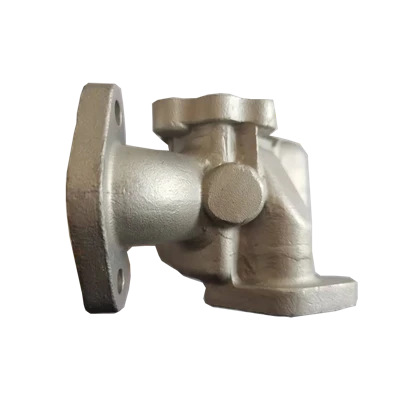
Your Professional Casting Supplier
Qingdao Hailong Machinery Group Co., Ltd., is a national high-tech manufacturer specializing in automotive dies, stamping parts, fixtures, jigs, vehicle cabs, truck bodies, and special vehicles. Our products are widely used in automotive OEM, heavy industry, and transport equipment markets across Europe, America, the Middle East, Japan, and South Korea.
Full In-House Production Chain
We cover the full process from mold design, stamping, welding, coating to final assembly, ensuring stable quality and delivery control.
Strong Engineering Capability
With experienced technicians and advanced R&D systems, we provide precise design, process optimization, and technical support for complex projects.
Advanced Equipment
We operate large CNC machines, stamping lines, laser cutting systems, and over 50 testing devices to ensure accuracy and product reliability.
Certified Quality System
We are certified with IATF 16949, ISO9001, ISO14001, and ISO45001, ensuring compliance with global automotive and industrial standards.
-
![Fan Impeller Casting]() Fan Impeller CastingCustom cast fan impellers in aluminum, ductile iron and steel. Die cast, lost foam and precision cast, CNC finished and balanced to your drawing.
Fan Impeller CastingCustom cast fan impellers in aluminum, ductile iron and steel. Die cast, lost foam and precision cast, CNC finished and balanced to your drawing. -
![Valve Body Fittings]() Valve Body FittingsOur cast valve body is manufactured by advanced metal casting technology, serving as the core housing component for industrial control valves. We support customized dimension, material and machining
Valve Body FittingsOur cast valve body is manufactured by advanced metal casting technology, serving as the core housing component for industrial control valves. We support customized dimension, material and machining -
![Valve Body Parts]() Valve Body PartsOur cast valve body is manufactured by advanced metal casting technology, serving as the core housing component for industrial control valves. We support customized dimension, material and machining
Valve Body PartsOur cast valve body is manufactured by advanced metal casting technology, serving as the core housing component for industrial control valves. We support customized dimension, material and machining -
![Centrifugal Pump Casing Parts]() Centrifugal Pump Casing PartsCentrifugal Pump Casing Parts | Premium Wear-Resistant & Corrosion-Resistant Pump Housing Components
Centrifugal Pump Casing PartsCentrifugal Pump Casing Parts | Premium Wear-Resistant & Corrosion-Resistant Pump Housing Components -
![Milling Machine Worktable]() Milling Machine WorktableProfessional cast iron machine tool base blanks & semi-finished bases for milling and grinding machines. We focus on integral cast iron base casting and OEM custom processing, supplying standard
Milling Machine WorktableProfessional cast iron machine tool base blanks & semi-finished bases for milling and grinding machines. We focus on integral cast iron base casting and OEM custom processing, supplying standard -
![Machine Columns]() Machine ColumnsOur cast oil pump impeller is a core precision component for oil pump systems, manufactured with advanced sand casting and precision machining processes. Adopting high-quality materials like ductile
Machine ColumnsOur cast oil pump impeller is a core precision component for oil pump systems, manufactured with advanced sand casting and precision machining processes. Adopting high-quality materials like ductile -
![Machine Tool Bed Casting]() Machine Tool Bed CastingCast Iron Machine Tool Base | High Strength · Precision · Stable Performance. Core Position: Core bearing component designed for various machine tools, suitable for machining centers, milling
Machine Tool Bed CastingCast Iron Machine Tool Base | High Strength · Precision · Stable Performance. Core Position: Core bearing component designed for various machine tools, suitable for machining centers, milling -
![Oil Pump Impeller Blank]() Oil Pump Impeller BlankOur cast oil pump impeller is a core precision component for oil pump systems, manufactured with advanced sand casting and precision machining processes. Adopting high-quality materials like ductile
Oil Pump Impeller BlankOur cast oil pump impeller is a core precision component for oil pump systems, manufactured with advanced sand casting and precision machining processes. Adopting high-quality materials like ductile -
![Machine Tool Bed]() Machine Tool BedCast Iron Machine Tool Base | High Strength · Precision · Stable Performance. Core Position: Core bearing component designed for various machine tools, suitable for machining centers, milling
Machine Tool BedCast Iron Machine Tool Base | High Strength · Precision · Stable Performance. Core Position: Core bearing component designed for various machine tools, suitable for machining centers, milling -
![Machine Tool Column]() Machine Tool ColumnCasting Machine Tool Column | Heavy-duty Precision · High Rigidity · Industrial Adaptation. Core Position: A core structural component solution for CNC machine tools, machining centers, milling
Machine Tool ColumnCasting Machine Tool Column | Heavy-duty Precision · High Rigidity · Industrial Adaptation. Core Position: A core structural component solution for CNC machine tools, machining centers, milling -
![Machine Tool Worktable]() Machine Tool WorktableCast Iron Machine Tool Worktable | High Precision · Strong Load-bearing · Wear Resistant. Core Position: Core bearing and machining reference component for machine tools, providing a stable platform
Machine Tool WorktableCast Iron Machine Tool Worktable | High Precision · Strong Load-bearing · Wear Resistant. Core Position: Core bearing and machining reference component for machine tools, providing a stable platform -
![Centrifugal Pump Casing]() Centrifugal Pump CasingCast Centrifugal Pump Casing | Pressure-Resistant · Corrosion-Proof · High-Efficiency Flow Channel. Core Position: Core pressure-bearing component of centrifugal pumps, suitable for industrial water
Centrifugal Pump CasingCast Centrifugal Pump Casing | Pressure-Resistant · Corrosion-Proof · High-Efficiency Flow Channel. Core Position: Core pressure-bearing component of centrifugal pumps, suitable for industrial water


Specification
|
Material Type |
HT250/HT300 Gray Cast Iron, QT450/QT500 Ductile Iron |
|
Casting Process |
Resin Sand Casting, Lost Foam Casting |
|
Size Range |
Height 1000-5000mm, Width 500-2000mm, Wall Thickness 15-50mm |
|
Dimensional Accuracy |
Grade CT8-CT10, Key Dimensional Tolerance ≤±0.01mm |
|
Mechanical Properties |
Tensile Strength ≥250MPa, Bending Strength ≥350MPa, Hardness HB180-240 |
|
Surface Quality |
Roughness Ra≤1.6μm, Flaw Detection Standard UT/MT Level 2 |
|
Aging Treatment |
Natural Aging 28 Days/Artificial Aging (200-300℃, 8-12 Hours) |
Types of Casting
The casting produced by our company mainly include the following types:
Die Casting
Die casting is a manufacturing process that forces molten metal under high pressure into reusable steel molds (called dies) to produce complex, high-precision parts.
Sand Casting
Sand casting is a highly versatile metalworking process in which molten metal is poured into a mold cavity made of compacted sand.

Advantages of Casting over Forging
Lower Cost
Casting is generally less expensive than forging, primarily due to the fact that it requires less material and is a less complex process. In forging, a block of metal is heated and then shaped by applying pressure, often with the use of a die. This process can be time-consuming and requires a significant amount of energy. Casting, on the other hand, involves pouring molten metal into a mould and allowing it to cool and solidify.
Greater Design Flexibility
Casting also offers greater design flexibility than forging, as it allows for more intricate and complex shapes to be created. In forging, the metal is shaped primarily by the die, which limits the design options. Casting, however, allows for more intricate and detailed designs to be achieved, as the molten metal can flow into every nook and cranny of the mould.
Improved Surface Finish
Casting also typically results in a smoother and more polished surface finish than forging. In forging, the metal is compressed and stretched, which can cause surface imperfections such as cracks and blemishes. Casting, on the other hand, produces a smoother surface finish, as the molten metal fills the mould evenly and solidifies uniformly.
Reduced Waste
Casting also produces less waste than forging, as it allows for greater precision in the manufacturing process. In forging, the metal is shaped by the die, which can result in excess material being wasted. Casting, however, allows for more precise control over the amount of material used, which reduces waste and saves on costs.
Applications of Casting
Automotive
For the automotive industry castings are vital. Given the wide variety of castings they incorporate, passenger cars or trucks are inconceivable without them.
General Engineering
In general engineering in particular, the entire design of a machine is often dominated by cast components and relies upon innovation and advanced technology to meeting increasingly stringent requirements.
Agriculture Machines
Agriculture is the backbone of almost all world economies. But also an agricultural machine is incomplete without agricultural castings. Parts of iron steel and light metals serve as wheels, hubs and brake drums, hydraulics, engine and powertrain components etc.
Electrical Engineering
Like the mechanical engineering industry, electrical engineering covers a wide range of subsectors. Castings are used in power generation equipment such as, for example, transformers and generators, as well as in electric motors.
Medical Engineering
There is hardly a better example than the use of cast components for the medical sector to show how people are directly helped by castings.
Ship Building
Mobility on the high seas, whether it serves to transport cargo or passengers, is inseparably linked to castings made by foundries. Foundries produce large engines for ships of all sizes on a large scale and are largely responsible for energy efficiency on the oceans.
The Aerospace Industry
Castings, often produced by the investment casting process, are to be found in turbines and jet engines as well as in the fuselages, undercarriages and interior fittings of airplanes.
Energy and Renewable Energy
Renewables without castings is inconceivable. Castings are used in many aspects of the energy industry such as for pumps and valves for the oil and gas sector.
Railway Engineering
The transport of passengers as well as goods on land depends on the efficiency of rail engineering in all the regions of the world. To a large extent, it is due to castings that rail transport is one of the safest traffic infrastructures to be found anywhere.
Commonly Used Materials in Casting
Cast Iron
Good wear resistance and vibration damping
01
Carbon Steel
Strong and durable
02
Alloy Steel
Enhanced mechanical properties
03
Aluminum
Lightweight and corrosion-resistant
04
Brass & Bronze
Good machinability and corrosion resistance
05
Casting vs Forging
|
Feature |
Casting |
Forging |
|
Process |
Molten metal poured into mold |
Solid metal shaped using force |
|
Strength |
Lower |
Higher |
|
Design Flexibility |
High |
Limited |
|
Internal Defects |
Possible (porosity, shrinkage) |
Minimal |
|
Best Use |
Complex shapes |
High-stress applications |
Customizable Options
Size Customization
Support table customization of different length, width, thickness and surface area according to customer drawings
Material Customization
High-strength special cast iron (e.g., QT600) or alloy cast iron available for ultra-heavy load requirements
Structure Customization
Customize T-slot specifications/quantity, reserve mounting holes, optimize reinforcing rib layout
Process Customization
Optional special processes such as chrome plating and nitriding to enhance wear/corrosion resistance; support special-shaped table design
Packaging and Shipping
|
Packaging |
Wrapped with anti - rust paper, bubble film, and packed in export cartons or wooden cases. |
|
Shipping |
Shipping by sea, by air, by express are acceptable. According to your requirements. |
Our Factory


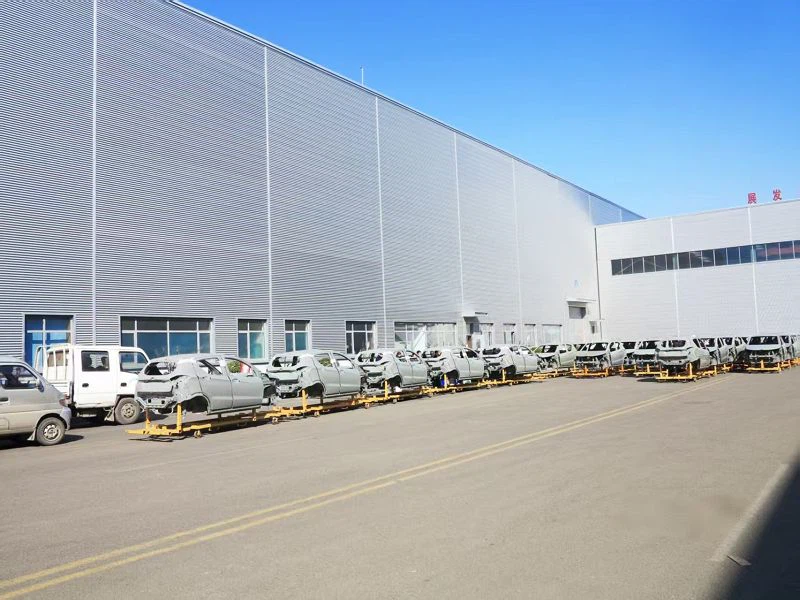
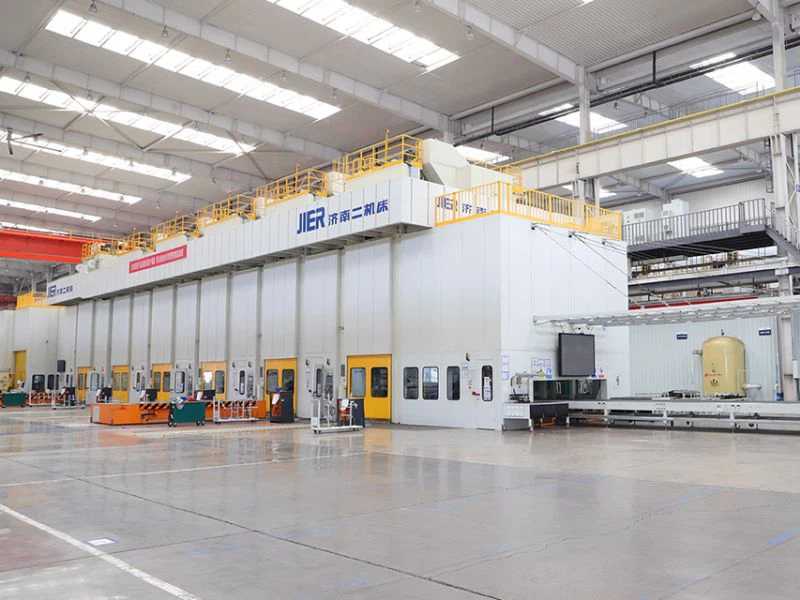


Our Certificates
IATF 16949, ISO9001, ENVIRONMENTAL MANAGEMENT SYSTEM CERTIFICATION, NSYSTEM CERTIFICATION


FAQ
Qingdao Hailong Machinery Technology Co., Ltd. is one of the most experienced casting manufacturers and suppliers in China, also supports customized service. Please feel free to buy discount casting made in China here from our factory. Contact us for pricelist.
Popular Products