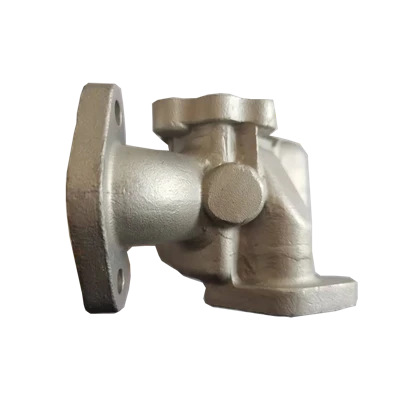
Your Professional Die Casting Supplier
Qingdao Hailong Machinery Group Co., Ltd., is a national high-tech manufacturer specializing in automotive dies, stamping parts, fixtures, jigs, vehicle cabs, truck bodies, and special vehicles. Our products are widely used in automotive OEM, heavy industry, and transport equipment markets across Europe, America, the Middle East, Japan, and South Korea.
Full In-House Production Chain
We cover the full process from mold design, stamping, welding, coating to final assembly, ensuring stable quality and delivery control.
Strong Engineering Capability
With experienced technicians and advanced R&D systems, we provide precise design, process optimization, and technical support for complex projects.
Advanced Equipment
We operate large CNC machines, stamping lines, laser cutting systems, and over 50 testing devices to ensure accuracy and product reliability.
Certified Quality System
We are certified with IATF 16949, ISO9001, ISO14001, and ISO45001, ensuring compliance with global automotive and industrial standards.
-
![Engine Block Casting]() Engine Block CastingCast Engine Block | High Strength · Precision · High Temperature & Pressure Resistance · Excellent Air Tightness. Core Position: Core bearing component of engine power system, suitable for passenger
Engine Block CastingCast Engine Block | High Strength · Precision · High Temperature & Pressure Resistance · Excellent Air Tightness. Core Position: Core bearing component of engine power system, suitable for passenger -
![Gearbox Housing Parts]() Gearbox Housing PartsCast Transmission Housing | High Strength · Precision · Reliable Sealing · Transmission Adaptation. Core Position: Core bearing component of transmission power transmission, suitable for passenger
Gearbox Housing PartsCast Transmission Housing | High Strength · Precision · Reliable Sealing · Transmission Adaptation. Core Position: Core bearing component of transmission power transmission, suitable for passenger -
![Clutch Casing Parts]() Clutch Casing PartsCast Clutch Housing | High Strength · Precision · Accurate Positioning · Reliable Sealing. Core Position: Core bearing and protective component of clutch system, suitable for passenger cars,
Clutch Casing PartsCast Clutch Housing | High Strength · Precision · Accurate Positioning · Reliable Sealing. Core Position: Core bearing and protective component of clutch system, suitable for passenger cars, -
![Die Cast Door Frame]() Die Cast Door FrameDie-Casting Door Frame | Lightweight · High Strength · Precision · Sealing Adaptation. Core Position: Core bearing and protective component of automobile doors, suitable for passenger cars,
Die Cast Door FrameDie-Casting Door Frame | Lightweight · High Strength · Precision · Sealing Adaptation. Core Position: Core bearing and protective component of automobile doors, suitable for passenger cars, -
![Automotive Water Pump Housing]() Automotive Water Pump HousingAutomobile Water Pump Housing | High Performance · Precision · Corrosion Resistance · Efficient Cooling. Core Position: Key component of the automobile engine cooling system, suitable for passenger
Automotive Water Pump HousingAutomobile Water Pump Housing | High Performance · Precision · Corrosion Resistance · Efficient Cooling. Core Position: Key component of the automobile engine cooling system, suitable for passenger -
![Oil Pump Casing]() Oil Pump CasingSmall Oil Pump Housing | High Performance · Precision · Corrosion Resistance · Stable Oil Delivery. Core Position: Key component of small oil pumps, suitable for various small mechanical equipment,
Oil Pump CasingSmall Oil Pump Housing | High Performance · Precision · Corrosion Resistance · Stable Oil Delivery. Core Position: Key component of small oil pumps, suitable for various small mechanical equipment, -
![Air Conditioning Compressor Housing]() Air Conditioning Compressor HousingAir Conditioner Compressor Housing | Pressure-resistant Sealing · High Precision · Core Structural Part of Refrigeration System. Core Position: A core pressure-bearing component solution for
Air Conditioning Compressor HousingAir Conditioner Compressor Housing | Pressure-resistant Sealing · High Precision · Core Structural Part of Refrigeration System. Core Position: A core pressure-bearing component solution for -
![Small Structural Components]() Small Structural ComponentsSmall Structural Components | Lightweight · High Precision · Strong Adaptability · High Reliability. Core Position: Core bearing and connecting components for various equipment, suitable for
Small Structural ComponentsSmall Structural Components | Lightweight · High Precision · Strong Adaptability · High Reliability. Core Position: Core bearing and connecting components for various equipment, suitable for


Specification
|
Material Grade |
HT250/HT300 Gray Iron; QT500/QT600 Ductile Iron; A356/ADC12 Aluminum Alloy |
|
Adaptable Displacement |
1.0L-16L (Larger displacement customizable) |
|
Number of Cylinder Bores |
3-cylinder, 4-cylinder, 6-cylinder, 8-cylinder, 12-cylinder |
|
Key Accuracy |
Cylinder Bore Roundness ≤0.008mm; Crankshaft Hole Coaxiality ≤0.015mm; Flatness ≤0.01mm/m |
|
Temperature Resistance |
≥450℃ (Standard); ≥550℃ (High-temperature Customization) |
|
Pressure Resistance |
≤18MPa (Burst Pressure) |
|
Air Tightness Pressure |
≥1.0MPa |
|
Machining Allowance |
2-3mm (Key Surfaces); 1.5-2mm (Non-key Surfaces) |
|
Service Life |
≥8 Years (Normal Working Conditions); ≥6 Years (Harsh Working Conditions) |
Advantages of Die Casting
Aluminun die casting can manufacture complex-shaped and light components but with an excellent strength-to-weight ratio, giving it an edge over other metal molding castings and investment castings.
Die casting products feature excellent mechanical properties. As the liquid metal solidifies under high pressure, the product appears to be fine, compact, and crystalline. Die casting parts are rigid with high hardness and strength.
Die casting produces parts with high durability and dimensional accuracy. Even when exposed to harsh conditions, the parts maintain their dimensional accuracy over time. As a result, die casting is used in fabricating complex and internal parts of machines that require high standards of precision and accuracy.
Die casting parts have a smooth, consistent crystalline surface. Die casting process alloys molten metal alloy to fill up the dies and create the exact shape. Therefore, provided the die is well shaped and the process is in the right condition, the parts will be fine and smooth.
Since the surface of die castings is often smooth with excellent mechanical features, die-cast parts often require less machining. In some cases, no machining at all. As a result, there is less need to spend on secondary operations.

Applications of Die Casting
Aerospace
The aerospace industry uses metal casting to manufacture aircraft engine components like housings and brackets using aluminum alloys (e.g., ADC12, A380) and magnesium alloys (e.g., AZ91D).
Automotive
The automotive industry uses the manufacturing process to make engine components like cylinder heads, transmission housings, blocks, and body parts such as wheel rims and door handles. Examples of automotive die casting materials used in the industry include aluminum alloys (e.g., ADC12, A380), zinc alloys (e.g., ZAMAK), and magnesium alloys (e.g., AZ91D).
Electronics
It is applicable in making electronics components such as connectors, heat sinks, and housings using aluminum alloys (e.g., ADC12, A380), zinc alloys (e.g., ZAMAK), and magnesium alloys (e.g., AZ91D). The manufacturing process can precisely make parts with complex details which are common to the electronics industry.
Consumer Products
Consumer products such as kitchen appliances, power tools, and other hardware are made using die casting process using aluminum, zinc, and tin alloy. Die casting offers high productivity, mass production, and cost-effectiveness, which are important in manufacturing these products.
Construction
The construction industry makes use of the die casting process in making hardware like hinges, window frames, and fixtures. The manufacturing process can produce parts with complex shapes hence it is important when functions and aesthetic appeal are important.
Magnesium
Magnesium alloy die casting is one example as it can make strong and lightweight parts, as well as some of the thinnest sections possible thanks to the melt’s low viscosity.
Zinc
Zinc is used where strength isn’t a priority as it’s a more affordable material and easy to work with. It’s also strong enough to make parts like enclosures and toys.
Copper
Copper isn’t used much in die casting because the high temperature could induce more thermal shock and it could crack. If you’re set on die-casting copper, you have to handle it very carefully and use a high-pressure process.
Pewter
Pewter is a soft alloy that combines other materials. It’s mainly tin, but also has traces of copper and bismuth. It’s used for decorative objects and is easy to die cast in low-pressure equipment.
Aluminum
Aluminum provides highly precise parts that range from moderately strong to very strong.
Lead
Lead has seen a significant reduction in use, but it’s still critically important for manufacturing (ICE) automotive battery parts, particularly terminals.
Tin-Based Alloys
Similarly, tin-based alloys are seen less these days, but the need does arise from time to time. They cause very low wear and stress on tools because of the low viscosity and melting point.
Differences Between Forging and Die Casting
|
Differences |
Forging |
Die Casting |
|
Process |
Involves shaping the metal by applying compressive forces |
Injection of the metal in a molten state into a mold under pressure |
|
Material |
Suitable for ferrous and non-ferrous metals e.g., steel and aluminum |
Suitable for only non-ferrous metals like aluminum, zinc, magnesium |
|
Mold Material |
Does not require a mold. But it uses a die |
Steel molds |
|
Production Speed |
Slower |
Faster |
|
Tolerance Control |
Moderate tolerance |
High tolerance control due to the precision mold manufacturing process |
|
Final Part Properties |
Improved mechanical properties due to the forging process |
Mechanical properties depend on the casting material |
Ordering Process
Inquiry - quotation - communication - order confirming - deposit payment - production - testing and debugging - balance payment - packing - delivery - customer receiving - after service.
Packaging and Shipping
|
Packaging |
Wrapped with anti - rust paper, bubble film, and packed in export cartons or wooden cases. |
|
Shipping |
Shipping by sea, by air, by express are acceptable. According to your requirements. |
Our Factory


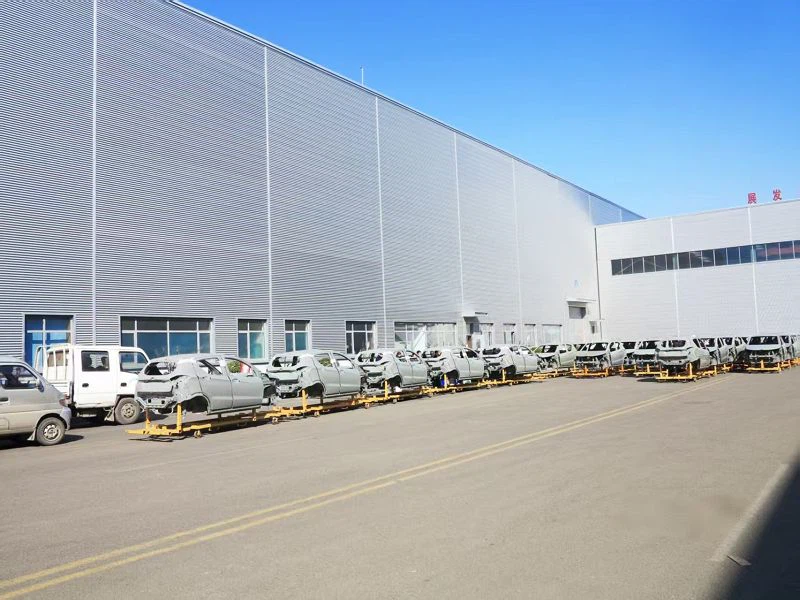
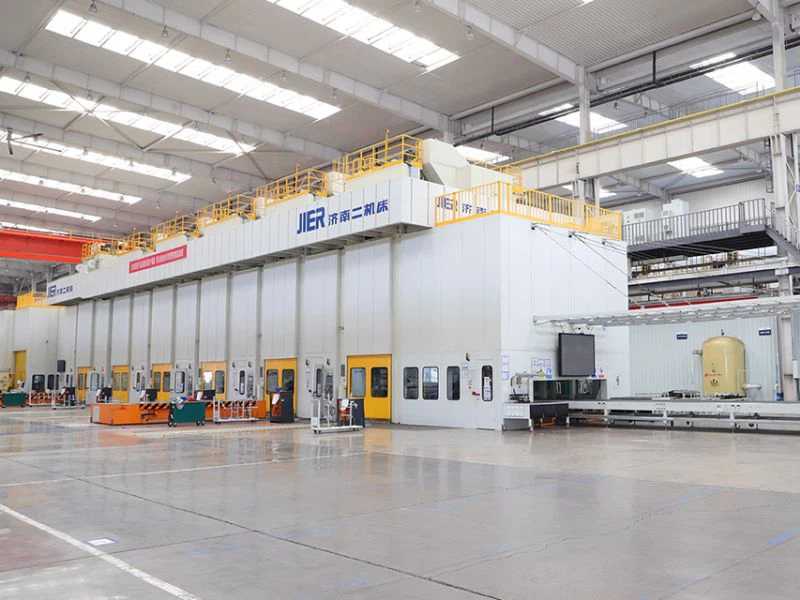


Our Certificates
IATF 16949, ISO9001, ENVIRONMENTAL MANAGEMENT SYSTEM CERTIFICATION, NSYSTEM CERTIFICATION


FAQ
Qingdao Hailong Machinery Technology Co., Ltd. is one of the most experienced die casting manufacturers and suppliers in China, also supports customized service. Please feel free to buy discount die casting made in China here from our factory. Contact us for pricelist.
Gearbox Housing Parts, fuel Pump Casing, Oil Pump HousingPopular Products