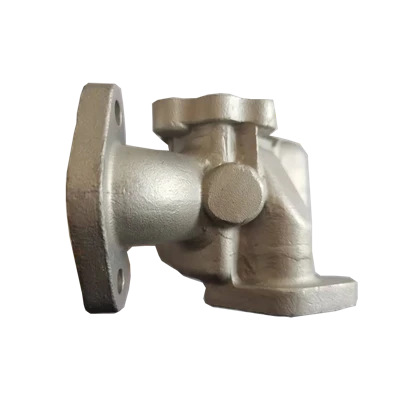
1. Sand Casting
The most widely‑used conventional casting process.
Uses sand as the mould material; patterns are used to form mould cavities.
Can produce large‑size, complex‑shape parts for iron, steel, aluminium alloys.
Sub‑types: green sand casting, resin‑bonded sand casting, clay sand casting.
Pros: low tooling cost, flexible part size. Cons: rough surface finish, dimensional tolerance is moderate.
2. Investment Casting (Lost‑wax Casting)
Wax patterns are coated with ceramic slurry; wax melts and drains out before pouring molten metal.
Produces high‑precision, thin‑wall, intricate components.
Suitable for stainless steel, alloy steel, high‑temperature alloys.
Pros: excellent surface quality, tight tolerances. Cons: higher cost, limited part weight.
3. Lost Foam Casting (Full‑mould Casting)
Expandable polystyrene foam pattern stays inside the sand mould. Molten metal vaporises the foam when poured.
No parting lines, no cores needed for many complex internal structures.
Common for iron, steel and aluminium castings.
Pros: fewer defects, simplified moulding. Cons: foam‑related carbon defects risk.
4. Die Casting
High‑pressure casting inside reusable metal dies.
Molten metal is force‑injected under high pressure into hardened steel moulds.
Mainly for non‑ferrous metals: aluminium, zinc, magnesium alloys.
Two categories: hot‑chamber die casting, cold‑chamber die casting.
Pros: high throughput, good surface finish, high dimensional accuracy. Cons: high die cost, difficult for ferrous metals.
5. Permanent‑Mould Casting (Gravity Die Casting)
Reusable metal moulds, metal fills the cavity only by gravity, no high injection pressure.
Aluminium, magnesium, copper alloys.
Pros: better surface and mechanical properties than sand casting. Cons: mould wears, limited complex geometry.
6. Pressure Casting / Low‑pressure Casting
Metal is fed into permanent mould under controlled low gas pressure.
Good for leak‑proof castings, automotive wheels, structural aluminium parts.
Dense grain structure, reduced porosity.
7. Centrifugal Casting
Molten metal is poured into a rapidly rotating mould; centrifugal force distributes metal against mould wall.
Mainly for hollow rotational parts: pipes, rolls, cylinder liners, bushings.
Pros: dense casting, less shrinkage porosity. Cons: limited to rotation‑symmetrical shapes.
8. Shell Mould Casting
Pattern coated with resin‑coated sand to form a thin hard shell mould.
Better surface finish and accuracy than ordinary sand casting.
Used for medium‑small iron and steel components.
Quick comparison note
For large heavy iron/steel parts: sand casting / lost foam
High‑precision complex steel parts: investment casting
High‑volume light‑alloy parts: die casting / low‑pressure casting
Hollow tubular workpieces: centrifugal casting