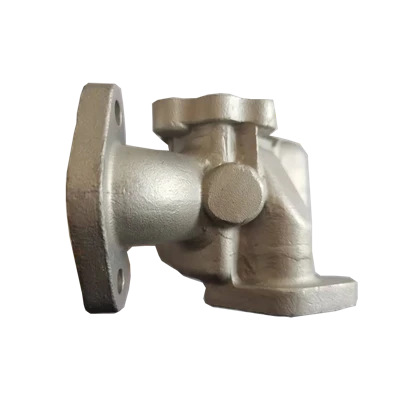
Cold forming and hot forming are two core metal processing technologies widely used in manufacturing, automotive, aerospace, and hardware production. The fundamental distinction between the two lies in the processing temperature relative to the metal's recrystallization temperature, which further leads to huge differences in process flow, material properties, product quality, production cost and application scenarios. This article elaborates on their key differences in comprehensive dimensions.
1. Core Definition & Processing Temperature
Cold Forming
Cold forming, also known as cold working, refers to metal forming processing carried out at room temperature or below the metal's recrystallization temperature. For most common metals (steel, aluminum, copper), the recrystallization temperature is generally 400–600°C, so cold forming is completed under normal ambient temperature without external heating. Typical processes include cold stamping, cold forging, cold rolling, and cold bending.
Hot Forming
Hot forming, or hot working, is conducted at a temperature higher than the metal's recrystallization temperature but lower than its melting point. The metal blank is heated uniformly to a high-temperature plastic state in advance, then processed by forging, rolling, stamping and other forming methods. Common hot forming processes cover hot forging, hot rolling, hot extrusion, and hot pressing.
2. Material Structure & Mechanical Properties
Cold Forming Characteristics
Since the processing temperature is lower than the recrystallization temperature, no recrystallization occurs during deformation. The metal grains are squeezed, stretched and deformed along the force direction, producing an obvious work hardening (strain hardening) effect. This process significantly improves the metal's hardness, tensile strength and surface rigidity, but reduces its plasticity and toughness. Besides, the metal forms a directional fibrous structure, resulting in slight anisotropy in mechanical properties.
The internal structure of cold-formed parts is dense with no coarse grains, and the dimensional stability of the finished product is excellent.
Hot Forming Characteristics
High-temperature processing triggers continuous recrystallization of the metal. The deformed coarse grains are broken and recrystallized into uniform, fine equiaxed grains, eliminating work hardening and internal residual stress. Hot-formed metals maintain excellent plasticity and toughness with uniform internal structure and isotropic mechanical properties.
However, high-temperature heating may cause slight grain growth if the temperature is too high or the holding time is too long, which will slightly reduce the material's surface hardness and strength compared with cold-formed parts.
3. Product Quality & Dimensional Accuracy
Cold Forming
Without high-temperature heating, there is no oxidation, decarburization or thermal deformation on the product surface. The finished parts feature smooth surface, high dimensional accuracy and small tolerance, and basically no subsequent finishing processing is needed. The compact surface structure also endows the product with better wear resistance and fatigue resistance.
Hot Forming
High-temperature heating inevitably causes surface oxidation, scaling and decarburization of the metal blank, resulting in a rough surface of the finished product. Meanwhile, uneven cooling after processing is prone to thermal shrinkage and deformation, leading to low dimensional accuracy and large tolerance. Most hot-formed parts require follow-up processes such as turning, grinding and shot blasting to remove oxide scales and correct dimensions.
4. Process Difficulty & Production Cost
Cold Forming
Cold forming requires large forming equipment with high tonnage, as the metal has high hardness and low plasticity at room temperature, requiring greater deformation force. The mold wear is serious, and the one-time equipment and mold investment is high. However, the process flow is simple: no heating, cooling or heat treatment procedures are needed, the production cycle is short, the material utilization rate is high (up to 90%以上), and the subsequent processing cost is low. It is very suitable for mass automated production.
Hot Forming
The high-temperature plastic state of the metal greatly reduces deformation resistance, so the requirement for equipment tonnage is low, and the mold loss is small with low initial equipment investment. But the process is cumbersome, requiring blank heating, temperature holding, high-temperature forming and slow cooling procedures, which consumes a lot of energy and fuel. The production cycle is long, the material loss caused by oxidation and scaling is large, and additional finishing and heat treatment processes increase the overall production cost. It is mostly used for small-batch and large-scale part processing.
5. Advantages & Disadvantages Summary
|
Processing Type |
Advantages |
Disadvantages |
|---|---|---|
|
Cold Forming |
1. High dimensional accuracy and smooth surface;2. Dense internal structure, improved hardness and strength via work hardening;3. No oxidation and decarburization, high material utilization;4. Short process cycle, suitable for mass production;5. No residual stress after processing. |
1. High deformation resistance, high requirements for equipment and molds;2. Low material plasticity, difficult to process complex and large parts;3. Obvious anisotropy of mechanical properties. |
|
Hot Forming |
1. Low deformation resistance, easy to form complex and large structural parts;2. Uniform grain structure, good plasticity and toughness, no anisotropy;3. Low equipment tonnage requirement, low mold cost;4. Eliminates internal defects such as pores and looseness of blanks. |
1. Low dimensional accuracy, rough surface with oxide scales;2. High energy consumption, long production cycle;3. Large material loss and high subsequent processing cost;4. Easy to produce thermal deformation and residual stress after cooling. |
6. Typical Application Scenarios
Cold Forming Applications
It is mainly used for manufacturing small, precise, high-strength standard parts and structural parts, including bolts, nuts, rivets, precision bearing parts, automotive thin-plate stamping parts, aluminum alloy precision accessories, and cold-rolled steel sheets for daily use.
Hot Forming Applications
It is suitable for processing large-scale, thick-walled, complex-shaped heavy parts and blanks with poor room-temperature plasticity, such as automotive crankshafts, connecting rods, large gear forgings, steel rails, thick steel plates, aerospace high-temperature alloy parts, and large mechanical equipment structural parts.
Conclusion
In short, cold forming and hot forming have their own unique advantages and applicable ranges. Cold forming focuses on precision, high efficiency and high surface quality, and is the preferred process for mass production of small precision parts. Hot forming focuses on strong formability and improved internal material quality, and is irreplaceable in the processing of large, complex and high-toughness mechanical parts. In actual industrial production, manufacturers will select the appropriate forming process according to the part's size, precision requirements, mechanical performance indicators and production batch.