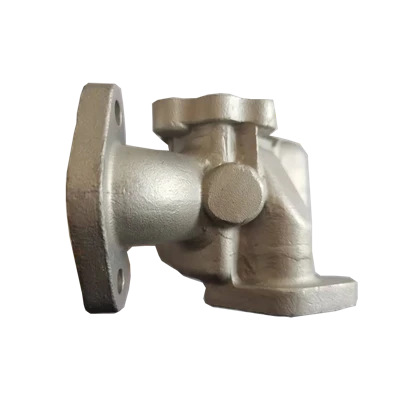
Casting works by heating a metal or alloy to a molten state, then pouring it into a mold of a specific shape. After cooling and solidification, the desired shape and properties of the metal product (i.e., a casting) are obtained. This process utilizes the excellent fluidity of metal in its molten state, allowing it to fill complex cavities and ultimately form intricately structured part blanks or finished products.
The core process can be summarized in the following key steps:
Mold Preparation: Based on the shape, size, and material requirements of the part, a matching mold is created. Commonly used molding materials include sand molds (such as quartz sand, clay, resin, etc.), metal molds, and ceramic molds. Sand casting is the most basic and widely used form, accounting for over 70% of global casting production.
Alloy Melting: The selected metal material (such as cast iron, cast steel, aluminum alloys, etc.) is heated in a furnace until completely liquefied, and its chemical composition and pouring temperature (usually between 1100℃ and 1600℃) are controlled to ensure good fluidity and molding quality.
Pouring and Molding: Molten metal is poured into the mold cavity through the gating system. Depending on the process, gravity casting, pressure casting, or vacuum casting may be used. Pouring temperature and speed must be strictly controlled: excessively high temperatures can easily cause shrinkage cavities and porosity; excessively low temperatures may lead to incomplete filling or cold shut defects.
Solidation and Cooling: The liquid metal gradually cools and solidifies in the mold cavity. During this process, the temperature field distribution affects the formation of defects such as shrinkage porosity and cracks. A reasonable solidification sequence (such as sequential solidification or simultaneous solidification) helps improve the density of the casting.
Sand Removal and Cleaning: After cooling, the casting is removed from the mold. The surface is cleaned of molding sand, gating gates, risers, and burrs. Commonly used equipment includes shot blasting machines and cutting machines. Cleaning sand castings is a labor-intensive process and one of the most challenging environmental steps in casting production.
Post-processing: Heat treatment (such as annealing, normalizing), shaping, rust prevention, or machining are performed as needed to improve the mechanical properties and dimensional accuracy of the castings.