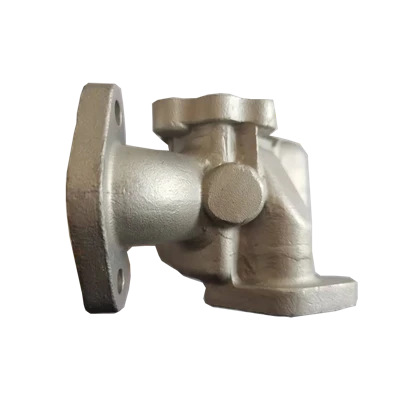
The core of optimizing casting process design lies in systematically controlling the synergistic relationship between materials, structure, parameters, and manufacturing processes to improve casting quality, production efficiency, and reduce costs. Combining modern digital methods and engineering experience, optimization can be achieved from the following dimensions:
Optimizing Casting Structure Design to Improve Manufacturability
A reasonable structural design is a prerequisite for process optimization, directly affecting molding difficulty and defect risk.
Avoiding Structural Defect Inducing Factors
Avoid cross-shaped wall thicknesses to prevent heat concentration leading to shrinkage porosity.
Wall thickness should have a uniform transition; the maximum wall thickness should not exceed three times the minimum wall thickness, otherwise shrinkage cavities are likely to occur.
The inner wall thickness is recommended to be 70%~90% of the outer wall thickness to achieve uniform cooling and reduce the risk of cracking.
Simplifying Molding and Demolding
Eliminate concave structures to reduce sand core usage and facilitate demolding.
The design of bosses and ribs should facilitate demolding, avoiding loose pieces or complex core boxes.
Large planar structures should preferably adopt the "horizontal pouring and vertical cooling" method to prevent sand inclusion defects. III. Refined Design of the Process System
Optimization of the Gating System
Design Goal: Achieve smooth filling and reduce turbulence and air entrapment.
Key Measures: Employ bottom-filling or multi-gate layouts to control the molten metal flow rate.
Utilize CAE simulation to predict the flow front and optimize the location and cross-sectional area of the ingate.
Incorporate overflow channels and venting channels to guide air entrapment areas to non-critical locations.