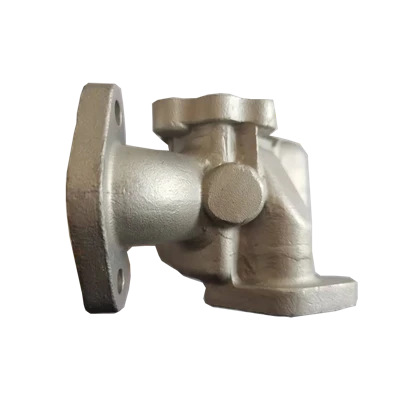
Die-cast aluminium product manufacturing has become a cornerstone of modern high-volume industrial production, serving as a cost-effective, high-precision, and scalable solution for complex metal components across global industries. Mass production based on aluminium die casting perfectly balances structural performance, production efficiency, and economic benefits, making it the preferred manufacturing process for automotive, electronics, aerospace, and new energy equipment. With mature automated production systems and standardized process control, manufacturers can deliver large batches of dimensionally consistent, lightweight, and high-strength aluminium die-cast parts to meet the growing demand for lightweight and high-precision industrial components.
Core Advantages of Aluminium Die Casting for Mass Production
The widespread adoption of aluminium die casting in mass manufacturing stems from its unique material and process advantages that outperform traditional casting and machining methods. First and foremost, the process features ultra-high production efficiency. Modern high-pressure die casting (HPDC) equipment completes a full forming cycle within a few seconds, enabling a single mold to produce hundreds of thousands of identical parts steadily throughout its service life. This rapid cyclic production mode eliminates the low-efficiency bottlenecks of manual machining and sand casting, supporting daily output of thousands of components and fully adapting to large-scale order demands.
Secondly, aluminium alloys deliver exceptional comprehensive performance. Boasting low density, high specific strength, and excellent thermal and electrical conductivity, die-cast aluminium parts achieve effective weight reduction while maintaining structural rigidity, which is critical for energy-saving and lightweight design in automobiles and electrical appliances. In addition, aluminium die-cast products have good surface finish and dimensional accuracy, with minimal post-processing allowance. The precision injection forming under high pressure effectively avoids dimensional deviations of batch products, ensuring consistent quality of every component in mass production.
Cost scalability is another key competitive edge. Although custom die molds require initial investment, the unit production cost drops significantly with expanding batch sizes. The precise metal injection system optimizes material usage, and residual aluminium materials can be recycled and reused, forming a closed-loop production system that reduces material waste. For mass orders of more than 5,000 pieces, the process can fully offset mold costs and achieve optimal economic benefits.
Standardized Mass Production Workflow of Die-Cast Aluminium Products
Stable batch production relies on standardized, full-process quality control and streamlined operational procedures. The entire mass production system covers mold development, raw material preparation, automated die casting, post-processing, and finished product inspection, with every link implemented with strict parameter control.
Mold design and manufacturing is the foundation of qualified mass production. Professional molds are customized according to product geometry, wall thickness, and tolerance requirements, with built-in circulating cooling water channels to stabilize mold temperature and ensure uniform cooling of each casting. High-precision molds effectively reduce defective rates such as shrinkage cavities and porosity, laying a foundation for long-term stable batch production.
In the formal die-casting stage, cold-chamber die-casting machines, the mainstream equipment for aluminium production, are adopted to adapt to the high melting temperature of aluminium alloys. Molten aluminium is injected into the closed mold cavity at a pressure of 20–150 MPa and high speed. Precise control of injection pressure, holding time, and cooling duration is implemented based on product specifications: thin-walled parts complete cooling in 1–3 seconds, while thick-walled parts require 5–10 seconds of cooling and pressure holding to compensate for solidification shrinkage and eliminate internal defects.
Post-processing and surface treatment further improve product applicability. Mass-produced blanks undergo unified deburring, trimming, and polishing to remove residual flash and gate materials. According to customer demands, standardized surface treatments such as anodizing, powder coating, and anti-corrosion treatment are carried out to enhance wear resistance, corrosion resistance, and surface aesthetics. All post-processing procedures are completed by automated assembly lines to ensure consistent processing effects for batch products.
Final quality inspection adopts sampling and full-inspection combined mechanisms. Dimensional tolerance detection, internal defect scanning, and performance testing are conducted in strict accordance with industrial standards. Unqualified products are screened out uniformly, and production parameters are adjusted timely to stabilize batch quality, ensuring all delivered products meet industry specifications and customer requirements.
Key Quality and Cost Control Strategies in Mass Production
The core challenges of mass production lie in maintaining zero-difference batch quality and controlling comprehensive production costs. To solve these problems, modern die-casting factories implement full-process automated control and digital management. Intelligent production systems monitor real-time parameters such as mold temperature, injection pressure, and melting temperature, automatically correcting parameter deviations to avoid batch defective products caused by manual operation errors.
Mold maintenance management is equally crucial. Regular cleaning, debugging, and wear detection of production molds are arranged to avoid dimensional errors caused by mold aging, extending mold service life and reducing mold replacement costs and production downtime. Meanwhile, standardized production scheduling optimizes equipment operation efficiency, avoids idle and repeated start-stop of machines, and further improves production capacity.
Material management optimization also drives cost reduction. Unified batching and melting of aluminium alloys ensure stable material composition of each batch of products. The recycling of waste materials such as runners and gates realizes resource reuse, greatly reducing raw material consumption and lowering the overall production cost of single products.
Main Industrial Applications
Benefiting from its lightweight, high-precision, and low-cost batch production characteristics, die-cast aluminium products are widely used in multiple high-demand industries. In the automotive industry, mass-produced aluminium die-cast parts include engine housings, transmission casings, automotive structural brackets, and new energy vehicle battery trays, helping reduce vehicle weight, lower fuel consumption, and improve cruising range.
In the consumer electronics and electrical appliance industry, high-precision thin-walled aluminium die-cast components such as motor shells, heat dissipation brackets, and electronic equipment housings are produced in large batches, relying on the excellent thermal conductivity and dimensional stability of aluminium alloys to ensure stable operation of electronic products. In addition, the products are also extensively applied in aerospace accessories, communication equipment, and intelligent hardware, becoming indispensable basic components for advanced manufacturing.
Development Trends of Mass Aluminium Die-Cast Production
With the upgrading of global manufacturing intelligence and the booming development of new energy and lightweight industries, the mass production of die-cast aluminium products is evolving toward higher precision, higher automation, and greener production. Intelligent fully automated die-casting production lines have gradually replaced semi-manual operation, realizing unmanned management from feeding, forming, and processing to inspection, greatly improving production efficiency and batch stability.
At the same time, the application of high-performance aluminium die-casting alloys further enhances product strength, toughness, and corrosion resistance, expanding the application scope of die-cast products in high-end manufacturing fields. Green production technologies such as low-energy melting and full waste material recycling are also continuously promoted, helping the die-casting industry achieve low-carbon and sustainable development.