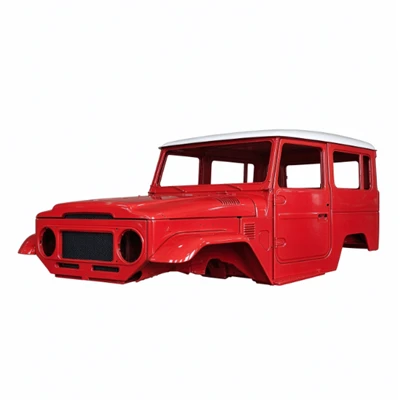
Stamping parts, with their advantages of high efficiency, high precision, and low cost, have become an indispensable processing method in modern manufacturing, especially in the automotive, home appliance, electronics, and aerospace industries.
Main advantages of stamping parts:
High Production Efficiency: Stamping rapidly forms parts on a press using dies. Ordinary presses can produce dozens of parts per minute, while high-speed presses can reach thousands per minute. This high production capacity is particularly suitable for mass production needs, significantly improving manufacturing speed.
High Material Utilization and Low Cost: Stamping is a minimally invasive process, producing almost no waste. Material utilization is typically 70%-85% or higher. Optimized layout design and the use of processes such as "one die, multiple parts" can further reduce waste and lower raw material costs.
High Dimensional Accuracy and Stable Quality: Because stamped parts are formed using precision dies, dimensional tolerances can be controlled within ±0.05 mm, with some precision parts even reaching the micron level. Parts in the same batch have high consistency and good interchangeability, achieving a "one-size-fits-all" production standard.
High product strength and rigidity: During cold stamping, the metal material undergoes plastic deformation and work hardening, resulting in a denser internal structure and thus increasing the strength and rigidity of the parts. Rigidity can be further enhanced by designing reinforcing ribs, flanging, and other structures.
Capable of machining complex shapes: Using multi-station progressive dies or compound dies, stamping can complete multiple processes such as blanking, bending, drawing, and flanging in one operation, manufacturing complex curved surfaces or thin-shell structures that are difficult to achieve with other processes, such as automotive body panels and mobile phone metal brackets.
Energy-saving and environmentally friendly, suitable for automated production: Cold stamping requires no heating, has low energy consumption, and is an energy-saving manufacturing process. The entire process is easily mechanized and automated, improving production safety and reducing labor costs.
Good surface quality, easy for subsequent processing: Stamped parts have smooth surfaces and generally do not require additional grinding before electroplating, spraying, and other surface treatments, which helps improve the product's appearance and corrosion resistance.