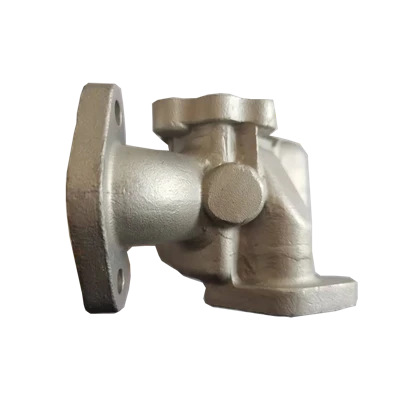
Stamping is a highly efficient and precise metal processing method widely used in mass production fields such as automobiles, electronics, and home appliances.
Advantages of Stamping Process
High Production Efficiency: Stamping can complete one or even multiple processes in a single stroke of a press. Combined with automated production lines, hundreds of parts can be produced per minute, making it suitable for large-scale mass production.
High Product Precision and Consistency: Die forming ensures stable part dimensions, with tolerances controllable within ±0.05 mm. This results in strong interchangeability and eliminates the need for subsequent finishing.
High Material Utilization: Stamping is a low-cut or no-cutting process. Through reasonable layout design, sheet metal utilization can reach over 90%, saving raw materials.
Capable of Processing Complex Shaped Parts: It can manufacture parts with complex structures such as bending, deep drawing, and flanging, and is especially suitable for products with irregular curved surfaces or thin-walled structures.
Energy-saving and low-cost: The process requires no heating (cold stamping), resulting in low energy consumption; the unit production cost decreases significantly with increasing batch size, demonstrating outstanding economic efficiency.
High strength and lightweight: The stamping process undergoes work hardening, increasing strength and rigidity while maintaining a relatively light weight, making it suitable for lightweight design requirements.
Easy to automate: The entire process, including feeding, stamping, conveying, inspection, and stacking, can be automated, reducing manual intervention and improving production safety and stability.